
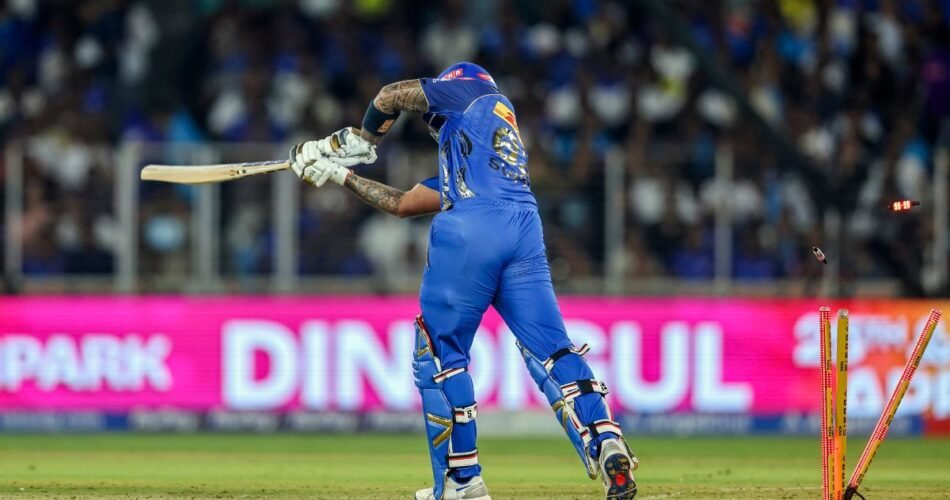
There is a unique silence that follows a World Cup victory, not in the stadiums or headlines, but within the players themselves. This phenomenon is akin to the mental health void described by Abhinav Bindra after winning India’s first individual Olympic gold in 2008. The noise of expectation fades, and players are left with a sense of returning to a sport that may feel smaller after conquering a significant moment.
In the IPL 2026 season, India’s champions are experiencing a shift post-T20 World Cup win. Players like Jasprit Bumrah, Axar Patel, Suryakumar Yadav, Hardik Pandya, and others are showing signs of post-performance fatigue. The numbers are uneven, indicating a psychological hangover following the highs of the World Cup victory.
Dr. Durva Dharmesh Shah, an expert in mental health, explains that athletes often experience a letdown after a major achievement like a World Cup win. The emotional intensity drops, and without a new target, motivation can diminish. This transition period can affect mental sharpness and performance, leading to bursts of brilliance rather than sustained excellence. The emotional connection in franchise cricket differs from international events, impacting how players engage with outcomes.
Overall, the hidden weight of mental fatigue plays a significant role in elite sports, affecting reaction time, confidence, and consistency. The IPL’s demanding nature adds pressure on players recovering from a World Cup cycle, making it challenging to maintain continuity in performance. The transition from one peak to another requires setting new goals and finding motivation outside of oneself to sustain performance levels.
Follow Franchise Cricket for more IPL news.

