
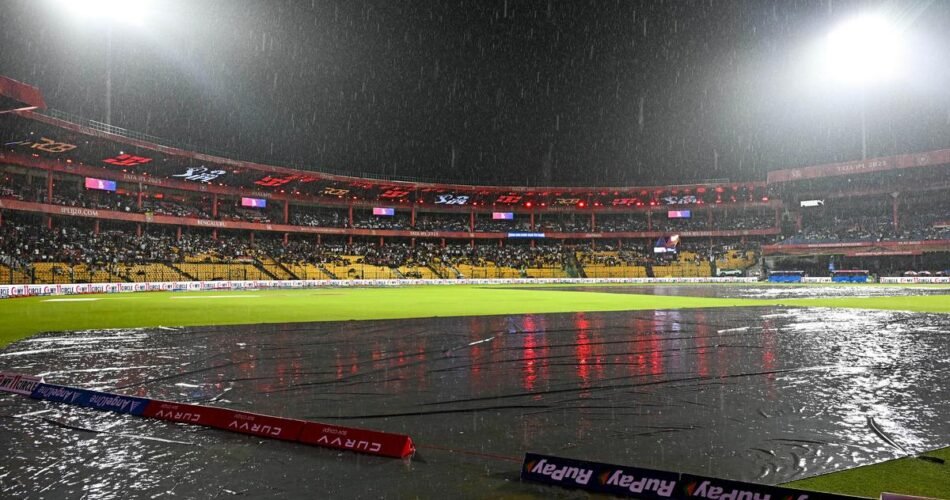
The 2026 Indian Premier League season kicks off with a highly anticipated match between Royal Challengers Bengaluru and Sunrisers Hyderabad. However, the unpredictable weather in Bengaluru raises concerns about the possibility of rain interrupting the game. In such situations, the Duckworth–Lewis–Stern method (DLS) is utilized to adjust targets and ensure fairness in limited-overs cricket matches.
The DLS method is necessary in cricket due to the frequent occurrence of rain interruptions, especially in matches where reserve days are not available. Adjusting targets based on a simple run-rate can lead to unfair outcomes, which is where DLS comes into play. The core idea behind DLS is to treat a batting innings as a combination of two resources: overs remaining and wickets in hand.
The formula for calculating the revised target under DLS is: Revised target = Team 1 score × (Team 2 resources ÷ Team 1 resources). This formula ensures that the target is adjusted based on the available resources of both teams, taking into account the changes in time and batting resources.
In addition to DLS, other methods such as the VJD Method used in Indian domestic cricket and the DL Standard Edition are also available, but DLS is the most widely recognized and used method for recalibrating targets in rain-affected matches. The implementation of DLS ensures that matches can continue fairly even in the face of unpredictable weather conditions.
Follow Franchise Cricket for more IPL news.

