
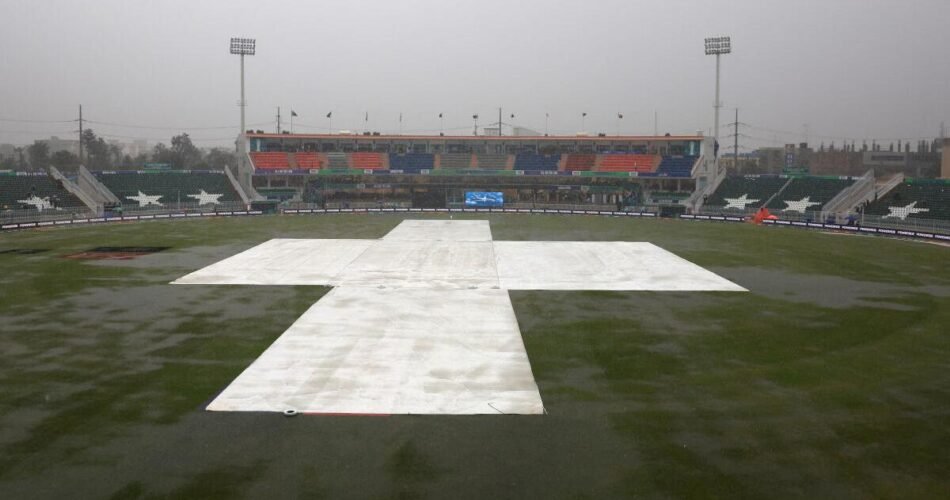
The Duckworth-Lewis-Stern (DLS) method is used to adjust target scores in rain-affected limited-overs matches. Introduced in 1997 by Duckworth & Lewis and updated in 2015 by Steve Stern, it is used in ODIs and T20s to calculate fair targets when overs are lost.
DLS is necessary because reserve days are not feasible for most matches and older methods like the Average Run Rate (ARR) and Most Productive Overs (MPO) methods were unfair and flawed. DLS adjusts targets based on wickets and overs left, making it a more accurate and fair method.
The formula for calculating the revised target score for Team 2 is Team 1’s score multiplied by Team 2’s resources divided by Team 1’s resources. This formula is updated yearly on July 1 to match modern scoring trends.
DLS fixes the issues of older methods by considering both wickets and overs as resources, dynamically adjusting targets based on match data, and being fairer to both teams. An example of how DLS works is if Team 1 scores 300 in 50 overs (100% resources) and Team 2 has 30 overs and 7 wickets left (~70% resources), the new target would be 210 runs.
Other methods like the VJD Method used in Indian domestic cricket and the DL Standard Edition, which is outdated and used without computers, are not as widely recognized as DLS. In summary, DLS is the current ICC method for rain-affected matches, replacing older flawed methods and using both overs and wickets to adjust targets. It is updated yearly to reflect modern scoring trends.
Follow Franchise Cricket for more IPL news.

