
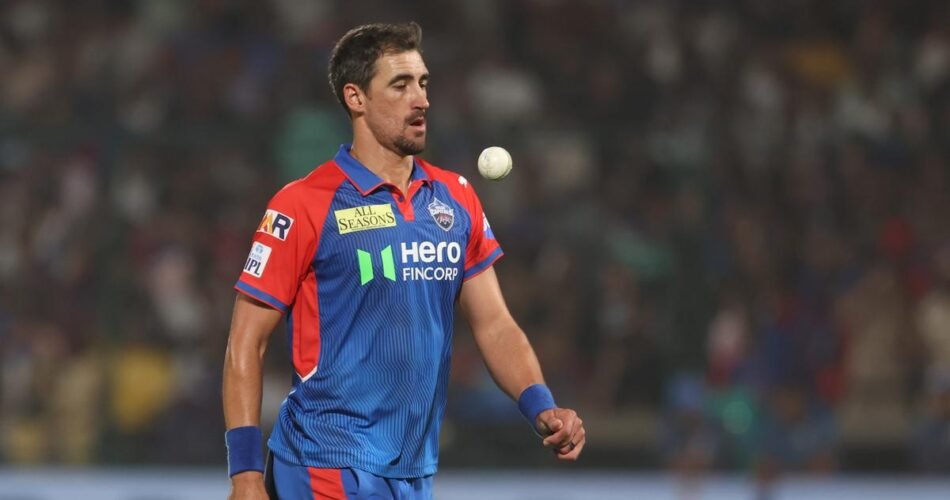
During a recent Super Over match between Delhi and Rajasthan, Australian fast bowler Mitch Starc was left surprised when a back-foot no-ball, rather than a front-foot one, cost him. This uncommon rule came into play after a third umpire review. So, what exactly is a back-foot no-ball and how does it differ from a front-foot one?
A back-foot no-ball occurs when the bowler’s back foot lands on or outside the return crease during delivery. In contrast, for a legal delivery, the back foot must land fully inside the return crease without touching or crossing it. This rule exists to prevent bowlers from creating extreme delivery angles that can make umpiring difficult, ensuring fair play and maintaining consistent delivery angles.
If a back-foot no-ball is called, the batting side is awarded an extra run and the next delivery is a free hit. The batter cannot be dismissed on that delivery except for run out, obstructing the field, or handling the ball. On-field umpires typically call back-foot no-balls, but in leagues like the IPL, the third umpire uses replays to make the call as it can be more challenging to spot than front-foot no-balls.
Interestingly, a bowler’s foot can go outside the return crease in the air without penalty, as long as the point of contact with the ground is inside the crease. If the foot touches outside or on the crease, it is deemed a no-ball. This rare rule adds an extra layer of complexity to the game, highlighting the importance of precision and accuracy in bowling techniques.
Follow Franchise Cricket for more IPL news.

