
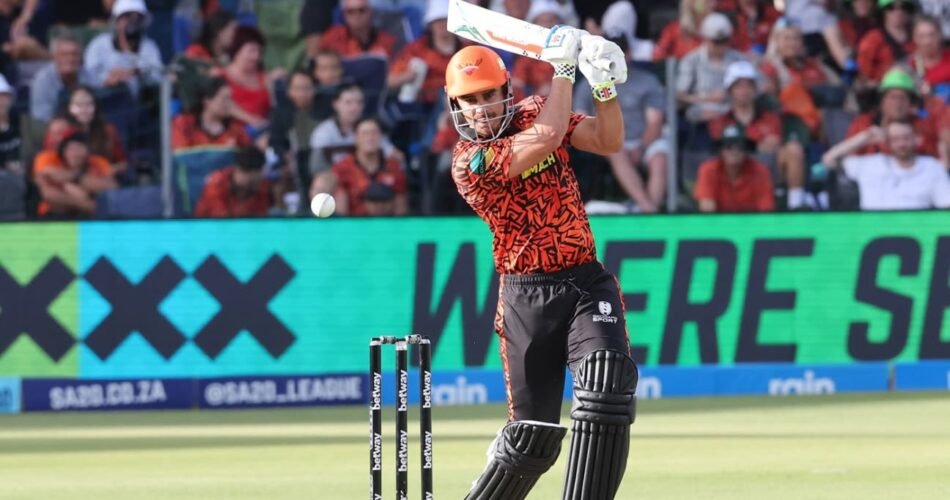
David Bedingham hits the ball down the ground during the Sunrisers Eastern Cape vs Durban’s Super Giants match in Gqeberha on January 19, 2025. The SA20 season three has been a success with sellout crowds at all venues, except for three matches that were rained off. Excitement builds as both Pretoria Capitals and Durban’s Super Giants are knocked out, and MI Cape Town, the underdogs of the past two tournaments, finish as log leaders. However, the cricket action has not always lived up to the hype.
One way to measure the quality of the matches is by looking at the number of close games. In the 2025 group stage, there were six tight matches, including one affected by DLS. This is fewer than the 10 close matches in 2024 and nine in 2023. Additionally, batting has been tougher this season, with teams scoring 120 or less 10 times compared to seven in 2024 and six in 2023. The run rate for the 2025 tournament is the lowest in league history at 7.91.
Experts believe that the challenging batting conditions are due to slower, lower pitches that have turned more than usual. Cricket South Africa is planning to introduce drop-in pitches for the 2027 World Cup to address this issue. The heavy international schedule and aged pitches have contributed to the difficult batting conditions this season.
Coaches also point out that batters need to adapt to the conditions and find ways to score big totals. Both MICT’s coach Robin Peterson and Joburg Super Kings’ coach Stephen Fleming have emphasized the importance of mindset and adapting strategies to succeed in challenging conditions. The 2025 league phase has seen a lower percentage of runs scored in boundaries compared to previous years, highlighting the need for batters to be more strategic in their approach. Fleming suggested that the timing of the matches may impact the quality of play in the SA20 tournament. He noted that the starting time of the games poses a challenge as domestic cricket is often played in the evening when the wickets are more favorable. The difference between playing conditions during the day and evening was evident, even if the pitch remained dry.
Most SA20 games start at 5.30pm local time, varying between day, day-night, and night games depending on the location. Double-header days begin with an early afternoon game, while Sunday matches start in the late afternoon and end at sunset. The use of floodlights can affect the pace of the game, but match times are primarily determined by broadcasters’ preferences rather than players’ needs.
Despite the scheduling challenges, the SA20 has garnered a positive reputation for its vibrant atmosphere and enthusiastic crowds. Even in defeat, players and fans remain engaged and supportive of their teams. After a disappointing season, Capitals players gathered on the field with their families and former captain Wayne Parnell, emphasizing the camaraderie and spirit of the tournament.
As the SA20 continues to evolve, players like Keagan Lion-Cachet appreciate the learning opportunities it provides. He acknowledged the tournament’s role in revitalizing cricket in South Africa and expressed gratitude for the chance to improve his skills through shared experiences.
Overall, the SA20 is a dynamic tournament that embraces growth and learning, ensuring its ongoing success in the future.
Follow Franchise Cricket for more SA20 news.

